

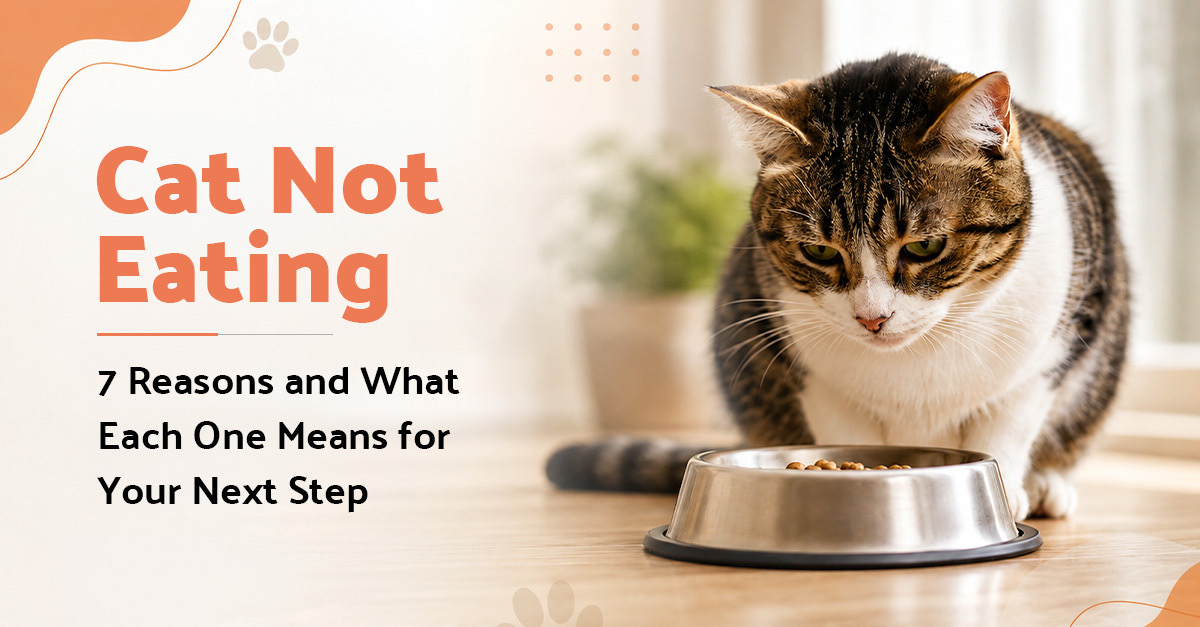
Cats are adept at concealing illness. A cat that has stopped eating is one of the clearest signals that something is wrong — because even cats that feel unwell will often continue other normal behaviours while quietly skipping meals.
The challenge for owners is that the reasons a cat stops eating range from completely benign to genuinely urgent. The right response depends entirely on the cause.
This guide covers the 7 most common reasons a cat stops eating, how to tell which one applies, and what to do next in each case.
If your cat has not eaten for more than 24 to 48 hours, regardless of the cause, veterinary assessment is recommended. Cats that go without food can develop hepatic lipidosis (fatty liver disease) — a serious condition that develops faster than in most other species.
Reason 1 — Stress or environmental change
Cats are highly sensitive to changes in their environment. A new home, a new pet, a change in routine, loud noise, or even a rearranged piece of furniture can trigger appetite loss in sensitive cats.
What it looks like: appetite loss that started around a specific change. Cat is otherwise alert, drinking, and using the litter box normally.
What to do: identify and minimise the stressor where possible. Offer familiar food in a quiet, low-traffic area. Most stress-related appetite loss resolves within 24 to 48 hours. If it continues beyond 48 hours, book a vet appointment.
Reason 2 — Food refusal or preference change
Cats can develop strong preferences for specific textures and flavours. A sudden change in food brand, formula, or texture — even within the same product line — can cause a cat to refuse meals entirely.
What it looks like: the refusal started when a new food was introduced. Cat may sniff the food and walk away. No other symptoms.
What to do: revert to the previous food if available. If you need to transition foods, do it gradually over 7 to 10 days — 25% new food to start, increasing slowly. Warming the food slightly can also help increase palatability.
Reason 3 — Dental pain or mouth discomfort
Dental disease is extremely common in cats and frequently goes undiagnosed because cats mask oral pain well. A cat with tooth pain or gum disease may approach the food bowl, smell the food, and then walk away — the anticipation is there but eating is painful.
What it looks like: the cat shows interest in food but does not eat, or starts eating and stops. May paw at the mouth or drool occasionally. Possible bad breath.
What to do: book a veterinary dental examination. Do not attempt to examine the mouth yourself — cats in dental pain will bite. Dental disease is the most under-treated cause of appetite loss in cats.
Reason 4 — Nausea or digestive upset
Cats can experience nausea from a wide range of causes — hairballs, eating something that did not agree with them, motion sickness, or early-stage illness. Nauseous cats typically show less interest in food and may have a hunched posture.
What it looks like: reduced or absent appetite, possible vomiting or retching, slightly quiet or withdrawn behaviour. Usually temporary.
What to do: withhold food for 4 to 6 hours to let the stomach settle, then offer a small amount of bland food (plain cooked chicken or a sensitive stomach formula). Ensure fresh water is available. If vomiting is persistent or the cat cannot keep water down, seek veterinary attention.
Reason 5 — Upper respiratory infection
Cats rely heavily on smell to identify food. An upper respiratory infection that blocks the nasal passages effectively makes food invisible to them — if they cannot smell it, they will not eat it. This is particularly common in kittens.
What it looks like: sneezing, nasal discharge, watery eyes alongside appetite loss. The cat may seem interested in strong-smelling food but not eat much.
What to do: gently clear nasal discharge with a warm damp cloth. Warm the food slightly to increase the smell. Offer strong-smelling foods like tuna or sardines in water. If symptoms last more than 48 hours or the cat develops a fever or laboured breathing, see a vet.
Reason 6 — Underlying illness or chronic condition
Appetite loss is one of the first signs of many serious conditions in cats — kidney disease, hyperthyroidism, diabetes, inflammatory bowel disease, and liver disease among them. In older cats especially, unexplained appetite loss that lasts more than 24 to 48 hours warrants prompt investigation.
What it looks like: appetite loss without an obvious environmental or dietary trigger. May be accompanied by weight loss, changes in thirst or urination, lethargy, or vomiting.
What to do: do not wait and see beyond 48 hours. Book a veterinary appointment and request bloodwork. Early detection of chronic conditions significantly improves outcomes and reduces long-term costs.
Reason 7 — Pain from injury or illness elsewhere in the body
Cats in pain from any cause — arthritis, an injury, post-surgical recovery, or an internal condition — will often stop eating. Pain suppresses appetite across most species, and cats are especially likely to go quiet and stop eating when they are hurting.
What it looks like: recent injury, surgery, or change in mobility. Cat is withdrawn, not grooming, avoiding interaction.
What to do: if there is a known injury or recent procedure, contact your vet for guidance on pain management. If there is no obvious cause, veterinary assessment is needed to identify the source.
Quick reference: next step by scenario
| Situation | Recommended action |
| Not eating + recent change at home | Wait 24hrs, minimise stressor |
| Not eating + new food introduced | Revert to previous food, transition slowly |
| Interested in food but walks away | Vet appointment — likely dental issue |
| Not eating + sneezing/nasal discharge | Home care 48hrs, vet if no improvement |
| Not eating + vomiting | Bland diet, monitor hydration, vet if persists |
| Not eating + lethargy or weight loss | Vet within 24 hours — bloods recommended |
| Not eating + complete refusal for 48hrs | Vet appointment — urgent |
When to use AI triage for a cat that is not eating
If your cat stopped eating and you are not sure which of the above scenarios applies, PetCare AI’s AI Vet can help you work through the most likely causes based on your specific situation — species, age, other symptoms, and recent changes. It will return a triage level and a clear recommended next step.