

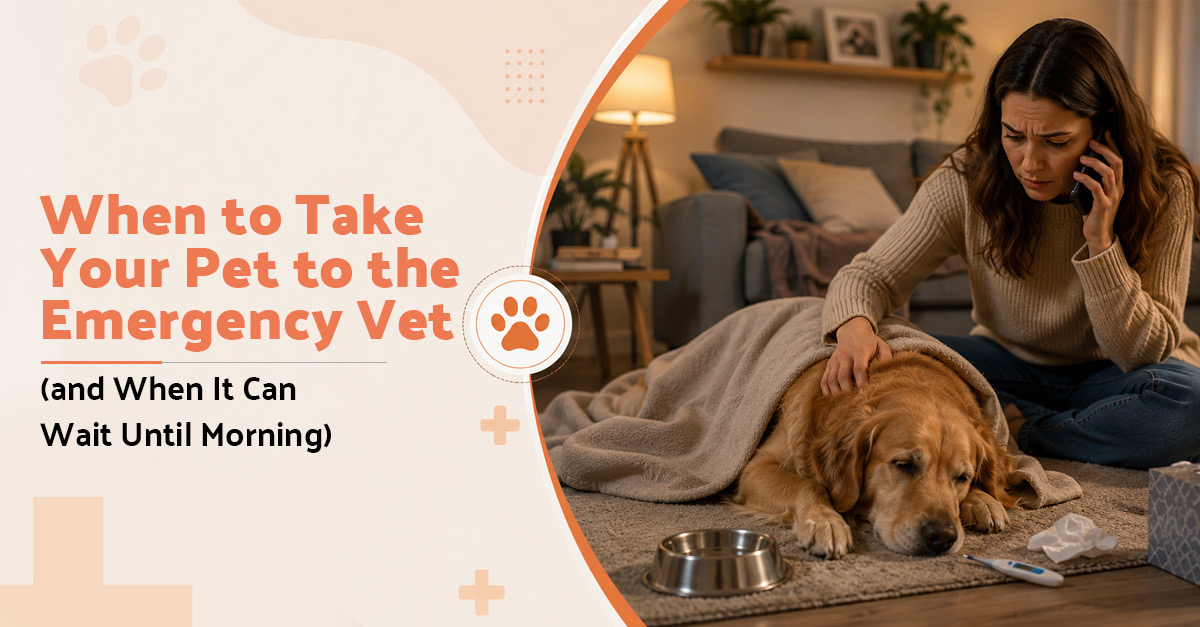
It is 10:45pm. Your dog has been acting strangely for the past hour and you are trying to decide: is this an emergency, or can it wait until the regular vet opens at 8am?
That decision is one of the most stressful moments in pet ownership made harder by the fact that most online searches return a list of every possible worst-case scenario alongside the most benign explanations, with no guidance on how to tell them apart.
This guide gives you a clear framework. Emergency care now, vet visit tomorrow, or safe to monitor at home and how to tell the difference.
Go to the emergency vet immediately; do not wait
| If your pet is showing any of the symptoms below, do not search for more information. Call your nearest emergency animal hospital now. |
Breathing
- Laboured or rapid breathing at rest
- Blue, grey, or white gums indicate oxygen deprivation
- Choking or gagging without producing anything
- Breathing with the mouth open (in cats always abnormal)
Collapse and loss of consciousness
- Any collapse that does not immediately self-correct
- Seizures lasting more than two minutes or multiple seizures within an hour
- Loss of consciousness or inability to stand
Trauma
- Hit by a vehicle even if the pet seems okay; internal injuries may not be immediately visible
- Fall from significant height
- Severe lacerations with significant bleeding that does not stop within five minutes
Swallowing a toxin or foreign object
- Known ingestion of chocolate, grapes, raisins, xylitol, medications, or household chemicals
- Known or suspected ingestion of a foreign object large enough to cause obstruction
Abdomen
- Distended, hard, or painful abdomen
- Repeated unproductive retching without vomiting (possible bloat — a life-threatening emergency in large breed dogs)
Urinary
- Male cat straining to urinate without producing any urine — a urinary blockage is an emergency
- Any pet that has not urinated in over 12 hours despite appearing to try
Book a vet appointment today within a few hours
These symptoms are not emergencies requiring immediate action tonight, but they warrant veterinary assessment the same day or early the next morning, not the standard appointment slot in three days.
- Eye injury or sudden cloudiness in one eye
- Deep wound that may require stitching
- Complete refusal to bear weight on a leg
- Suspected broken bone based on visible deformity or crepitus
- Single seizure that resolved, in a pet with no history of seizures
- Suspected ingestion of a small amount of a known toxin with no current symptoms
- Significant vomiting or diarrhoea with blood in it
- Pregnant pet that has been in labour for more than two hours without producing offspring
Standard vet appointment within 24 to 48 hours
These symptoms need veterinary attention but not urgently. Book a standard appointment first thing tomorrow.
- Limping with weight-bearing that has not resolved after 24 hours
- Not eating for more than 24 hours without an obvious cause
- Mild vomiting without blood more than twice in 24 hours
- Diarrhoea without blood that persists beyond 24 hours
- A lump or swelling that appeared suddenly
- Behavioural changes: unusual lethargy, hiding, or aggression without other symptoms
- Eye discharge or squinting that has not improved in 24 hours
Safe to monitor at home for now
These situations generally do not require veterinary attention immediately, provided there is no deterioration.
- Single vomiting episode in an otherwise well pet that eats and drinks normally afterward
- Mild limping after unusual activity with weight-bearing and no swelling
- Sneezing without other symptoms in a healthy adult pet
- Skipping one meal without other symptoms
- A small, soft lump that has been present for weeks without changing
| Monitoring at home means actively monitoring your pet every hour, noting any changes, and upgrading your response if things worsen. It does not mean going to sleep and checking in the morning. |
The question that matters most
When in doubt, the single most useful question to ask yourself is: has my pet’s condition changed in the last hour?
A symptom that is stable even if concerning is less urgent than one that is actively getting worse. Deterioration is the key signal that monitoring at home is no longer sufficient.
How PetCare AI helps with the 10 pm decision
PetCare AI’s AI Vet is available 24 hours a day specifically for this moment. You describe what you are observing species, age, symptoms, timeline and receive a structured triage response: the most likely cause, the severity level, and a clear recommended next action.
It is not a replacement for emergency veterinary care when emergency care is needed. It is the tool that helps you make the call confidently, at 10 pm, when calling your regular vet is not an option.
| Get AI triage support 24/7. Try PetCare AI free at pet-care.ai |