
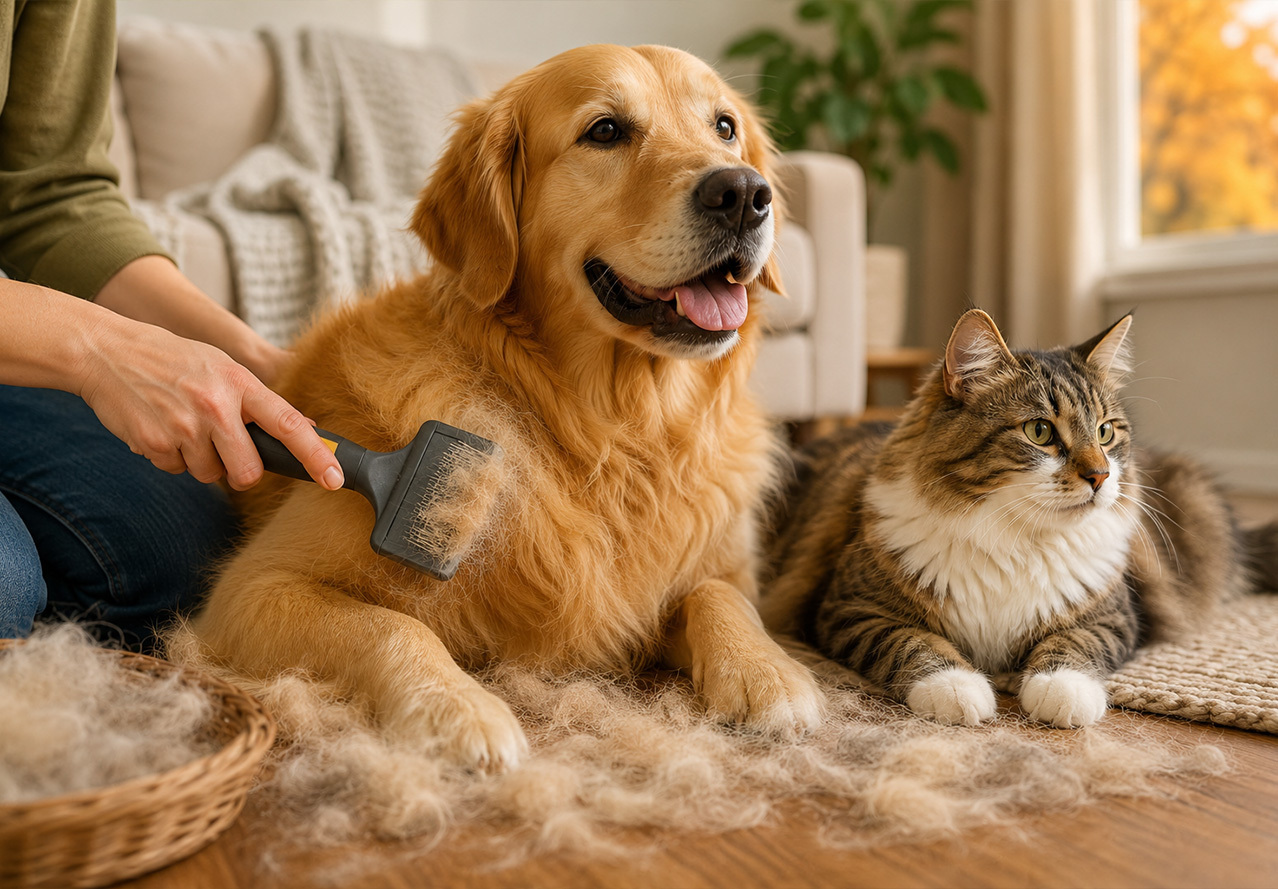
Pet owners often notice increased fur around the house during certain times of the year. Whether it is fur on furniture, clothing, or floors, shedding is a natural process that most pets experience. However, understanding the difference between normal coat changes and unusual hair loss is important for maintaining your pet’s overall health.
Seasonal shedding in pets usually occurs when animals adapt their coats to changing weather conditions. Many pets naturally lose thicker winter fur during warmer months and develop denser coats again before colder seasons arrive. While this process is completely normal, excessive fur loss may sometimes indicate underlying health concerns that require attention.
By understanding coat cycles, grooming routines, and nutritional needs, pet owners can better manage shedding while keeping their pets comfortable and healthy throughout the year.
What Causes Seasonal Shedding in Pets?
Most pets shed because their coats respond to environmental changes such as temperature, sunlight exposure, and humidity. This natural cycle helps animals regulate body temperature and maintain healthy skin.
Pets with double coats, including breeds like Huskies, Golden Retrievers, and German Shepherds, typically experience heavier shedding during seasonal transitions. Long-haired cats may also show noticeable fur loss during warmer months.
Although seasonal shedding in pets is normal, factors like stress, poor nutrition, allergies, or skin conditions can sometimes increase the amount of hair loss.
Normal Shedding vs Excessive Fur Loss
It is important to identify whether your pet’s shedding falls within a healthy range. Regular shedding usually appears evenly across the body without causing irritation or bald patches.
However, excessive shedding in pets may involve:
- Constant scratching or licking
- Red or inflamed skin
- Patchy hair loss
- Dry and dull fur
- Sudden increase in shedding volume
These symptoms may indicate allergies, infections, parasites, hormonal imbalances, or nutritional deficiencies. If unusual shedding continues for an extended period, consulting a veterinarian is recommended.
Grooming Plays a Major Role
Proper grooming is one of the most effective ways to manage pet shedding. Brushing removes loose fur before it spreads around the home and also helps improve blood circulation and coat health.
Helpful grooming practices include:
- Brushing pets regularly according to coat type
- Using de-shedding tools for thick coats
- Bathing pets with pet-safe shampoos
- Avoiding overbathing, which can dry out the skin
- Scheduling professional grooming sessions when needed
Routine grooming also allows pet owners to monitor skin conditions, ticks, fleas, or unusual hair thinning more easily.
Nutrition and Hydration Affect Coat Health
Healthy skin and fur start with proper nutrition. Pets require balanced diets rich in protein, vitamins, and essential fatty acids to maintain strong and healthy coats.
Some nutrients that support coat health include:
- Omega-3 and Omega-6 fatty acids
- High-quality proteins
- Zinc and biotin
- Adequate hydration
Poor nutrition can often contribute to dry skin and excessive shedding in pets, making diet an important part of overall coat care.
Managing Pet Hair at Home
During shedding seasons, pet fur can quickly accumulate around the house. Maintaining a clean indoor environment can help reduce allergens and improve comfort for both pets and owners.
Simple cleaning tips include:
- Vacuuming carpets and furniture frequently
- Using washable pet covers
- Keeping lint rollers handy
- Washing pet bedding regularly
- Using air purifiers to reduce pet dander
Consistency is key when managing seasonal shedding in pets, especially during peak coat transition periods.
How Technology Helps Pet Owners Stay Organized
Modern pet care tools now make it easier for owners to manage grooming schedules, hygiene routines, and wellness tracking. Digital reminders can help pet parents maintain regular brushing and coat-care habits throughout the year. Using an animal care app can also simplify grooming management, health monitoring, and seasonal care planning for pets.
PetCare AI helps pet owners stay informed about grooming schedules, seasonal wellness management, and pet care routines. Organized grooming and monitoring can help reduce coat-related problems before they become severe.
Conclusion
Shedding is a natural part of a pet’s life, especially during seasonal transitions. However, understanding the causes, grooming requirements, and warning signs of unhealthy hair loss is essential for responsible pet care. With regular brushing, proper nutrition, and consistent hygiene routines, pet owners can effectively manage seasonal shedding in pets while supporting healthier skin and coats.
Monitoring changes in fur quality and overall health also helps identify early signs of potential medical concerns. Preventive care and routine grooming go a long way in keeping pets comfortable throughout the year.
FAQs
1. Why do pets shed more during seasonal changes?
Many pets naturally lose old or thick fur when temperatures begin to change. Seasonal coat changes help animals regulate body temperature and stay comfortable in different weather conditions. Breeds with dense or double coats usually experience heavier fur loss during these transition periods.
2. What causes abnormal hair loss in pets?
Unusual or heavy coat loss in animals can result from allergies, poor nutrition, skin infections, parasites, hormonal imbalances, or stress. If pet fur loss includes bald patches, redness, or irritation, it is important to seek veterinary guidance for proper diagnosis and treatment.
3. How can grooming help reduce pet shedding?
Regular brushing helps remove loose hair, improve coat circulation, and reduce fur buildup around the home. Consistent coat maintenance also allows pet owners to identify skin problems early and supports healthier fur growth during seasonal coat-shedding periods.
4. Which pets experience the most seasonal coat shedding?
Dogs with double coats and long-haired cat breeds generally experience more visible coat shedding during weather changes. Breed type, age, environment, and overall health can all affect the amount of fur pets naturally lose throughout the year.
5. How does PetCare AI help manage pet coat-care routines?
PetCare AI supports pet owners by helping organize grooming reminders, hygiene tracking, and seasonal wellness routines. Maintaining regular coat-care schedules becomes easier when pet parents can consistently monitor grooming and overall pet health in one place.
6. Can PetCare AI help track excessive fur loss in pets?
Yes, PetCare AI can help pet owners stay consistent with grooming schedules and monitor changes in pet coat conditions over time. Tracking grooming habits and skin-care routines may help identify unusual shedding patterns earlier and improve preventive pet care management.